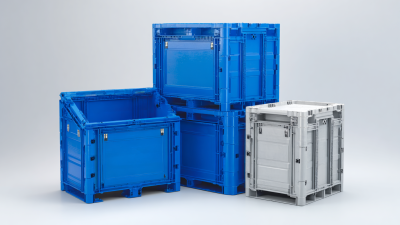
Picking the right Plastic Pallet Box isn’t just about the price tag. You really have to think about what your warehouse actually needs—like, do the containers fit your racks and handling equipment? And what about your day-to-day workflow? If you’re shopping from abroad, things get a bit trickier—you’ve got to keep an eye on shipping dimensions, the material, how much weight they can handle, and the storage conditions. Little details can make a big difference. For example, a box that’s too tall might end up wasting space on the trailer, and if the base isn’t suitable, forklifts might struggle to handle it smoothly.
In this guide, I’ll walk you through seven different options to consider when comparing Plastic Pallet Boxes across various supply chains. We’ll look at practical features like whether the walls are solid or ventilated, if they’re stackable, or if they have access doors—plus, their compatibility with common pallet-handling gear. Keep in mind, product specs can vary quite a bit from model to model. So, before you click “buy,” double-check the dimensions, load limits, and temperature guidelines directly with the manufacturer. When in doubt, ask for drawings or even a sample—it might save you from a costly mistake later on.
A Plastic Pallet Box can be a real game-changer for bulk storage, manufacturing, or shipping—stuff like that. But honestly, no one-size-fits-all solution exists. Some folks want something super durable; others need something that's easy to clean or gives better visibility of what's inside. It’s all about trade-offs. Remember, this list is just a starting point—not the final word. Make sure to verify any claims from suppliers against real specs and think about your own operation’s needs. Doing a bit of comparison work can really help narrow down your options, without fooling yourself into thinking there’s one perfect box for everything.

Global Buyer Criteria: ISO 6780 Footprints, Payload, and Stack Load
For global buyers, a plastic pallet box must fit the handling system before its color or wall style matters. ISO 6780 provides common pallet footprint dimensions, but it does not certify a box or guarantee compatibility. Check the box’s external base measurements against pallet trucks, conveyors, racking, and container plans. A few millimeters can matter at a tight conveyor transfer. Measure the actual unit, not only the catalogue drawing.
Compare payload and stack load as separate figures. Payload is the weight carried inside one box; stack load concerns the weight supported by lower boxes. Ask whether stated ratings apply to static storage, movement, or both. A box rated for a tall stack on a cool warehouse floor may perform differently in a warm truck, with uneven contents. Details matter.
Request test conditions and a clear safety margin. Check how the base is supported, how loads are distributed, and whether lids or interlocking features affect stacking. Small detail. Big consequence. One weak assumption can turn a neat warehouse stack into a handling problem. Still, no specification sheet captures every route or loading pattern, so confirm the measurements and ratings against your actual equipment and shipment conditions.
Rigid-Wall HDPE Boxes: 1,200 × 1,000 mm Bases for Bulk Handling
Rigid-wall HDPE pallet boxes with 1,200 × 1,000 mm bases provide a steady footprint for bulk handling. Their fixed sides help contain cartons, components, or loose production materials during warehouse transfers. This base size may suit existing pallet lanes, but it does not guarantee a clear fit. Check aisle width, door openings, and forklift turning space with the loaded box in mind. Good fit matters.
The rigid walls resist everyday knocks better than flexible containers, while smooth interior surfaces are easier to wipe between compatible loads. Look closely at wall thickness, corner ribs, base support, and fork-entry openings. These details affect how the box performs under repeated lifting. Maximum load and stacking ratings vary by design, so compare the rated figures with your actual load weight and stacking pattern. Even a well-built box can deform when weight sits unevenly.
Ask how the HDPE grade performs in your operating temperatures, especially in cold storage or near warm process areas. Also measure the usable internal dimensions; the 1,200 × 1,000 mm figure describes the base, not the space inside. A sample loaded with your real product can reveal awkward gaps or handling issues. That extra check may feel fussy, but pallet-box specifications can leave out the detail that matters on a busy shift.
Collapsible Boxes: Compare Folded Height and Empty-Return Volume
For global buyers, a collapsible pallet box can reduce return freight only when its folded profile suits the shipping lane. Measure folded height, not just the advertised reduction ratio. A 1,200 mm box folding to 300 mm uses roughly one quarter of its deployed height, before counting pallets, lids, and straps. Small parts matter. Confirm whether lids stack separately or remain attached, because either arrangement changes usable trailer space.
Compare the folded footprint with the loaded footprint, then estimate empty-return volume using actual outer dimensions. Multiply length by width by folded height, and include accessories or overhangs. Check stack limits too. A low folded stack may still waste space if feet, hinges, or uneven surfaces prevent stable stacking. Ask for a dimensioned drawing and sample pack plan; supplier figures may omit handling clearance. A spreadsheet estimate is useful, but it can be wrong.
Also compare folding time, latch access, and whether one worker can collapse the box without forcing its panels. These details affect dock labor over repeated cycles.
Pallet Box Plastic
options should be tested with the buyer’s pallet, truck, and return route, not judged by folded height alone.
Before committing, measure a real stack; a design that looks compact on paper may carry more air on the way back.
Vented Boxes: Open-Area Design for Produce Cooling and Drainage
Vented plastic pallet boxes use open-area walls to help cool produce after harvest and remove wash water or condensation. Air can move around stacked crates when the openings remain unobstructed. This matters in a cold room, where tightly packed solid walls may slow cooling. A Plastic Box Pallet can also make handling easier when forklifts need clear entry points. Check the box’s internal dimensions, load capacity, and stacking stability against your produce and packing line. Small openings are not always better; delicate items may need more support.
Tips: Leave space between boxes in storage, and keep vents clear of liners or labels. Test a loaded box with your actual produce before ordering in volume. Feel for uneven cooling. It happens.
For global buyers, compare ventilation patterns, drainage paths, and cleaning access—not just the outside size. Rounded corners and smooth interior surfaces can reduce places where residue collects, though no design replaces routine cleaning. Ask for a sample or technical drawing, then verify how the box fits your pallet, conveyor, and cold-room airflow. One detail is easy to miss: a well-vented box can still cool unevenly if stacked too tightly. Check real conditions before settling on a specification.
Attached-Lid Containers: 600 × 400 mm Modules for Distribution Systems
Attached-lid containers built around a 600 × 400 mm footprint can simplify handling across distribution systems. The modular size suits many common picking and storage layouts, but buyers should verify the container’s outer dimensions against conveyor guides, shelves, and vehicle space. Small differences matter. A lid that catches on a rail can slow a busy line.
The attached lid stays connected during opening, reducing loose parts around packing stations and delivery routes. It can also help protect contents from dust and incidental contact, though it is not automatically a sealed or waterproof closure. Check hinge strength, latch design, and access when containers are stacked. A Plastic Pallet Box Used for frequent circulation should be assessed for payload, empty weight, and expected handling conditions, not just its nominal footprint.
In practice, confirm whether the 600 × 400 mm measurement refers to the base or the external dimensions. Ask for a loaded-stack rating and test a sample with the actual goods; catalog figures cannot show every real-world snag. Labels and barcodes need a clear, durable placement area. It is easy to overlook that. And attached lids add material and can complicate some cleaning routines, so inspect hinge corners for residue. A short trial in the intended workflow often reveals more than a neat product diagram.
Insulated Pallet Boxes: Match Wall R-Value to Cold-Chain Set Points
Insulated Pallet Boxes: Match Wall R-Value to Cold-Chain Set Points
R-value describes how strongly a wall resists heat flow, but it cannot guarantee a product will stay within its target range.
Match wall insulation to the shipment’s set point, route duration, and expected outdoor conditions. A chilled load crossing a warm loading dock faces different risks from frozen goods in steady transit. Small gaps matter. Check lid fit, corner joints, and drain plugs, where heat can bypass insulated panels.
For a Plastic Pallet Plant Box carrying temperature-sensitive produce, assess the complete packed unit, not just a wall specification. Test it with a realistic load, since empty-box results can be misleading. Place calibrated temperature loggers near the product and at likely warm spots, such as the upper corners. Record the starting temperature, loading time, and exposure during transfers. Also consider airflow: tight packing may protect cargo, yet restrict cooling around the box. A higher R-value may slow temperature change, but it can also slow pull-down if goods enter warm. That trade-off is easy to overlook. Review test results against the actual route, then adjust insulation or handling practices when readings drift.
Food-Contact Boxes: Verify EU 10/2011 and FDA 21 CFR 177.1520
For food-contact use, a plastic pallet box needs more than a “food-grade” label. Ask for a Declaration of Compliance that identifies the resin and intended conditions of use. EU Regulation 10/2011 sets requirements for plastic materials and articles intended to contact food. FDA 21 CFR 177.1520 applies to specified olefin polymers; it is not a blanket approval for every plastic box.
Check that supporting test reports match the actual application. A box carrying chilled produce may face different contact conditions from one holding warm, fatty ingredients. Confirm the food type, temperature, contact duration, and whether the box is intended for repeated use. Look for overall and specific migration results where relevant, plus traceable documentation linking the tested material to the supplied product. Details matter.
In purchasing reviews, I would compare documents against the box’s real use, not just its product description. Ask suppliers to clarify gaps in writing. A certificate alone can leave questions unanswered. Inspect seams, corners, and inner surfaces too; cracks or residue can undermine clean handling, even when paperwork looks complete. Requirements can vary with the application, so have qualified compliance staff verify the evidence before approving a shipment.
EU 10/2011: Overall Migration Test Conditions
Bars show the specified contact duration; labels include the corresponding temperature. The applicable condition depends on the intended food, contact time and temperature. The EU overall migration limit is generally 10 mg/dm². FDA 21 CFR 177.1520 applies to specified olefin polymers and conditions of use; it is not a universal approval of a finished pallet box. Verify resin composition and the finished article’s suitability for its intended use.
Conclusion
Choosing the right Pallet Box Plastic solution starts with matching its footprint, payload, and stacking capacity to the handling system and goods. For global operations, compare common ISO 6780 base dimensions, then assess whether rigid-wall HDPE boxes with 1,200 × 1,000 mm bases suit bulk handling. Collapsible models can reduce empty-return volume, so compare their folded height and durability alongside their load ratings.
The product and supply chain determine the best design. Vented walls support airflow, produce cooling, and drainage, while attached-lid containers in 600 × 400 mm modules fit many distribution systems. For temperature-sensitive goods, compare insulation performance with required cold-chain set points. For food-contact applications, verify material documentation against relevant requirements, including EU 10/2011 and FDA 21 CFR 177.1520. Considering these factors together helps buyers balance handling efficiency, storage space, product protection, and compliance needs.